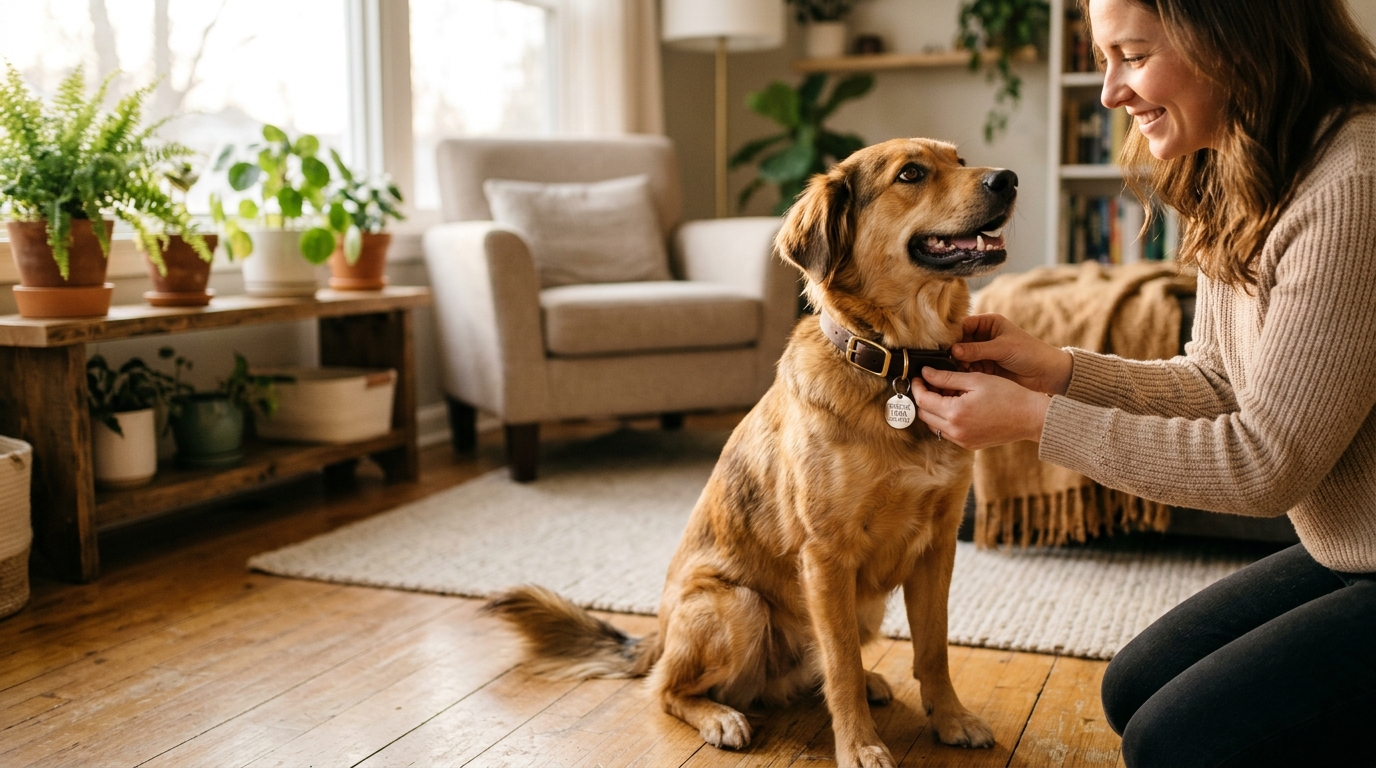
Should you change your rescue dog’s name? Yes, usually. Dogs learn names through repetition and rewards, so a new name can be taught at any age.
Need a name now? Try our rescue dog name generator, scroll to Rescue Dog Name Ideas below, or try the AI dog name generator for names matched to your dog.
This guide covers when to rename, how to switch names, and how to update the microchip.
Can You Change a Rescue Dog’s Name? The Short Answer
Yes. You can give a rescue dog a new name, and many owners choose one that fits the new home. A name is a sound your dog links with attention and rewards.
| Keep the old name if… | Change the name if… |
|---|---|
| Your dog already responds to it happily | Your dog flinches or avoids it |
| It has no known bad history | It sounds like a command, such as Kit (sit) or Bo (no) |
| You like it | It was only a shelter placeholder |
| It is short and easy to call | It is hard to say or call in public |
Not sure? Use the old name for a few days and watch your dog’s reaction. A relaxed, responsive dog may not need a new name.
When Does Changing a Rescue Dog’s Name Make Sense?
Renaming makes sense when the old name causes problems or your dog needs a clean start. These are the most common reasons.
The Old Name Has a Bad Association
Some dogs react badly to a name they heard during neglect or harsh treatment. If your dog tenses or backs away at the sound of it, a new name may help. You may not know the dog’s history, so watch body language.
The Name Sounds Like a Command
A name that sounds like sit, stay, no, or down can confuse your dog. Kit, Ray, and Bo are common examples. Pick a name that stands apart from your training words.
The Name Was Just a Shelter Placeholder
Shelters often name dogs quickly so each kennel card has a name. Those names are rarely tied to the dog’s past. If your dog never responded to it, you lose little by changing it.
You Simply Don’t Like It
You will say the name many times a day. If it feels awkward, change it. A name you enjoy saying makes training easier.
When Keeping the Name Is Better
If your dog already answers to it happily, keep it. A familiar name can feel comforting in a new home. You can also keep the name and add a nickname.
Is It Cruel to Change a Dog’s Name?
No. Changing a dog’s name is not cruel when you do it patiently and with rewards. Dogs do not treat a name as part of their identity the way people do. They learn it as a cue to pay attention.
Pairing the new name with treats and praise makes it a positive signal. Avoid using the new name when you scold. Learn more in our guide on how dogs learn their names.
Can You Change a Dog’s Name at Any Age?
Yes. Dogs of any age can learn a new name, but older dogs may need more repetition. The table shows what to expect.
| Time with your dog | What to expect | Tip |
|---|---|---|
| First weeks | Easiest window, since your dog is still learning your home | Start right away and reward often |
| About 1 year | The old name is familiar, so expect some mix-ups | Keep sessions short and upbeat |
| About 2 years | Habits are stronger, so it may take more repetition | Be consistent across the household |
| 5+ years | Possible, but may be slower | Change only for a clear reason, or add a nickname |
These are general expectations, not guaranteed timelines.
How to Change a Rescue Dog’s Name, Step by Step
Pick the new name, then pair it with a reward every time you use it. Most dogs adjust with steady practice over days to weeks.
Test it with our guide on how to choose a dog name. Aim for one or two syllables with no command clash.
A new name that shares a sound or vowel rhythm with the old one (e.g. Bella to Stella) can ease the switch.
Say the new name once in a cheerful voice. Deliver a high-value treat immediately when your dog looks at you.
Ask everyone in your household to use the exact same moniker consistently without reverting to the old name.
Mixed names slow down conditioning. Once you begin, phase out the former moniker entirely.
Start indoors in the living room without distractions, then move to the backyard, and finally out on leashed walks.
Every dog’s history is different. Some connect the dots in 48 hours; others need two to three weeks of gentle encouragement.
What about the 3-3-3 rule? It is a popular guide to rescue dog adjustment: about 3 days to decompress, 3 weeks to learn the routine, and 3 months to feel at home. If your dog is very shy at first, let the first weeks settle before you push the new name. See the ASPCA for adoption and adjustment resources.
Rescue Dog Name Ideas
Good rescue dog names are short, positive, and easy to say. Here are 30 ideas in three groups, each with a one-line reason it fits.
Easy-to-Learn Names
These have one or two syllables and avoid common command sounds.
- Milo: short, two syllables, easy to call across a park.
- Luna: soft vowels and a clear two-beat sound.
- Daisy: bright, cheerful, and easy to say.
- Cooper: a crisp first sound that stands out from everyday speech.
- Penny: ends in an upbeat ‘ee’ sound.
- Ollie: two syllables with a friendly ‘ee’ ending.
- Maple: warm, soft, and distinct from training words.
- Finn: one syllable, quick to say.
- Ruby: bold, bright, and simple to call.
- Teddy: cuddly and friendly in tone.
Want more like these? Browse names ending in Y.
Fresh-Start Names
These names mark a new chapter.
- Hope: says it plainly.
- Lucky: a nod to the day you met.
- Phoenix: a mythical bird that rises again, which suits a dog with a hard start.
- Sunny: bright and upbeat.
- Journey: celebrates the road that led to your home.
- Clover: a lucky-charm feel.
- Haven: the safe place you are giving.
- Sparrow: small, light, and free.
- Willow: gentle and graceful, named for the tree.
- Rowan: a tree name with a soft, steady sound.
Looking for something rarer? See these unique dog names.
Names by Personality
Match the name to the dog you are getting to know.
- Pearl (gentle): calm and precious.
- Honey (gentle): sweet and soft.
- Sage (gentle): calm and earthy.
- Atlas (bold): named for the Titan of Greek myth who held up the sky.
- Ranger (bold): fits an outdoorsy, adventurous dog.
- Rocco (bold): a strong, confident sound.
- Pickles (playful): silly and fun to shout.
- Biscuit (playful): warm, round, and cheerful.
- Doodle (playful): light and goofy.
- Bean (playful): one syllable, small and sweet.
Generate personalized, trauma-free names matched specifically to your rescue pup’s unique look, size, personality, and backstory.
Want names matched to your exact dog? Use the AI dog name generator or generate names from a photo. You can also browse boy dog names and girl dog names. Compare your picks with the most popular dog names or explore the full dog names directory. Read these dog naming tips before you decide. If you know the breed, try the breed name generators.
How to Update the Name on a Microchip and Adoption Records
Contact the microchip registry to update your dog’s name and your contact details. Steps vary by registry and country. Keeping your contact details current is what matters most for getting a lost dog home.
Check your adoption packet paperwork or have your veterinarian scan your dog at their initial wellness visit.
In the United States, use the official AAHA Universal Pet Microchip Lookup to pinpoint which database holds the registration.
Log into the online registry or call their customer support line. Some registries require a small transfer fee or proof of adoption.
Provide your primary veterinary clinic and municipal pet registration office with the new moniker and up-to-date contact details.
Order a new metal ID tag engraved with the new name and at least two active phone numbers.
Some rescue organizations ask to be notified when names or contact details change to keep alumni records accurate.
FAQ: Renaming a Rescue Dog
Yes, most rescue dogs can be renamed. These short answers cover what owners ask most.
Should I rename my rescue dog?
It is generally fine to rename a rescue dog. Dogs learn names through repetition and rewards, so a new name can be taught. Keep the old name if your dog responds happily and it has no bad associations. Change it if it causes problems or you dislike it.
Can you give a rescue dog a new name?
Yes. Pick a short name, say it in a cheerful voice, and reward your dog right after. Use it consistently and ask everyone in your home to do the same. Most dogs adjust over days to weeks, though older dogs may need more repetition.
Can you change a dog’s name after 1, 2, or 5 years?
Yes. Dogs of any age can learn a new name through association. A dog that has used the old name for years may need more repetition and patience. For a 5-year-old or older dog, weigh the benefit first, and consider adding a nickname instead of a full change.
Is it cruel to change a dog’s name?
No. A name is a sound your dog links with attention and rewards, not a part of its identity. Changing it patiently with treats and praise is not harmful. It can even help when the old name carries bad memories. Avoid using the new name when scolding.
Can you change a dog’s name on the microchip?
Often yes. Contact the microchip registry and ask to update the name and your contact details. Some registries offer online updates, while others need a phone call. Steps, fees, and rules vary by registry and country, so check with yours.
What is the 3-3-3 rule for rescue dogs?
It is a popular guideline for rescue dog adjustment: about 3 days to decompress, 3 weeks to learn the routine, and 3 months to feel fully at home. It is not a strict timeline. Time your rename with your dog’s comfort level.
Find the Perfect New Name for Your Rescue Dog
The fastest way to find a fresh-start name is to use our rescue dog name generator, which matches names by gender, personality traits, and fresh-start vibe, or try the AI dog name generator for names matched to your dog’s breed and appearance.
Tap the heart on names you like, then say each one out loud to hear how it sounds when you call it. Next, read how dogs learn their names. Know a friend who just adopted? Share this list on Pinterest or Facebook.