Traditional Culture, Nature & Kanji Meanings • 110+ Curated Picks
100+ Japanese Dog Names and What They Mean
✍️ Curated by Dog Names Lexicon Team•⏱️ 14 min master guide•📅 Updated for 2026•🛡️ AKC Standard & Phonetics Vetted
From Kuro to Sakura to Mochi — a full list of Japanese dog names with their meanings, organized by gender and style, for owners who want a name with real depth behind it.
📋 AT A GLANCE
Japanese Canine Naming Essentials
🌸
Seasonal Nature & FloraSakura (cherry blossom), Haru (spring), and Ren (lotus) reflect Zen reverence for the seasons.
⛩️
Historic Canine HeritageHonoring national treasure breeds like Akita Inu, Shiba Inu, and the faithful legend Hachiko.
🍙
Adorable Culinary MonikersMochi, Nori, Bento, and Matcha bring sweet, rounded two-syllable bounce to companion pups.
📋
1-Click Instant CopyTap any interactive pill or card throughout this guide to instantly copy the name to your clipboard.
🐾Vetted for Authentic Pronunciation, Deep Kanji Meanings & Melodic Cadence
⚡ INTERACTIVE TOOL
Instant Japanese Dog Name Filter
Search by keyword, trait, or vibe, or toggle categories with 1-click clipboard copy.
🔍
Showing 110 verified names
💡 Tap any chip to instantly copy to clipboard
⛩️ Linguistic Science & Canine Cognition
Why Japanese Names Work Well for Dogs
Japanese given names tend to run short — one, two, sometimes three syllables — with even, clipped pronunciation. That is a natural match for dog training, where a short, consistent acoustic sound is significantly easier for a dog to catch and respond to than a long, drawn-out moniker.
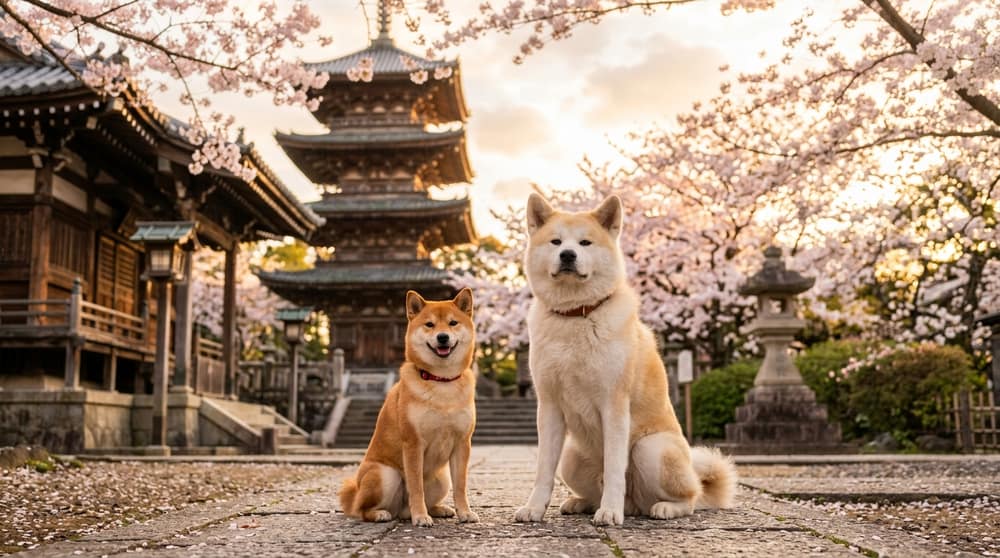
The cultural depth and meaning is the other draw. A dog named Kaze ("wind") or Yuki ("snow") carries a small story every time you say it. That is part of why these names show up so often on Shiba Inu and Akita owners specifically — both breeds are native to Japan, so a Japanese name matches the dog's own biological origin and cultural heritage.
💡
The Canine Training Advantage:Japanese vowels (A, I, U, E, O) are pure vowels without the confusing diphthongs common in English words. When you call "Ku-ro!" or "Ha-ru!", the acoustic frequency is razor-sharp, cutting through background wind and park commotion with immediate canine clarity.
🗡️ Strength, Elements & Lineage
Japanese Male Dog Names (With Meanings)
Male Japanese names balance elemental natural power with virtues of bravery, iron loyalty, and classical birth order tradition:
Kaze (風)Wind
Meaning: Swift wind, breeze, atmospheric freedom.
Best For: High-speed sprinters, sighthounds, and dogs who race like gusts of wind across fields.
Kuro (黒)Black
Meaning: Deep obsidian black, night.
Best For: Black Shiba Inus, Rottweilers, German Shepherds, and dark-coated protectors.
Take (竹)Bamboo / Resilient
Meaning: Bamboo — flexible, resilient, bending under storms without ever breaking.
Best For: Tenacious working breeds, brave rescue dogs, and sturdy companions.
Tetsu (鉄)Iron
Meaning: Solid iron, unyielding resolve.
Best For: Powerful guardian breeds like Akitas, Mastiffs, and Bulldogs.
Taro (太郎)Eldest Son
Meaning: First-born son; the cornerstone of the household.
Best For: Your very first family dog or the confident leader of a multi-dog pack.
Hachi (八)Eight / Fortune
Meaning: The number eight, symbolizing infinite loyalty and expanding luck.
Best For: Faithful companions who wait by the front door for your return every day.
📋 More Japanese Male Picks by Theme:
Nature-Inspired: Kaze (wind), Ren (lotus), Haru (spring), Riku (land), Umi (sea), Kai (sea), Aki (autumn), Taki (waterfall), Ryu (dragon), Yama (mountain).
Strength-Inspired: Kuro (black), Take (bamboo / strong), Ken (sword), Tetsu (iron), Go (strong), Takeshi (fierce warrior), Daiki (great vessel), Hiro (broad, abundant), Isamu (courage), Tora (tiger).
Japanese culinary names have evolved into a beloved global naming trend, especially for round, fluffy, sweet-tempered puppies. Each name evokes a distinct texture, flavor, and visual aesthetic:
Mochi (餅)
Pounded sticky sweet rice cake. The undisputed #1 Japanese pet name across social media — perfect for chubby, squishy puppies who love hugs.
Wasabi (山葵)
The fiery green horseradish root. A comical, punchy pick for feisty Terriers, Dachshunds, and pint-sized dogs with spicy attitudes.
Miso (味噌)
Warm, comforting fermented soybean paste. A cozy, gentle name for fawn, tan, or golden dogs like Golden Retrievers and Corgis.
Udon (うどん)
Thick, chewy, comforting wheat noodles. Hilarious and adorable for chunky English Bulldogs, Pugs, and bouncy Bassets.
Sushi (寿司)
Crisp, iconic, and recognized worldwide. Short, upbeat cadence that rolls off the tongue effortlessly during recall games.
Dango (団子)
Skewered sweet rice dumplings. A darling choice for petite breeds and curly-tailed companions who love curling into little balls.
Edamame (枝豆)
Young steamed green soybeans. Energetic, bouncy handle for puppies who never stop popping around the house.
Matcha (抹茶)
Finely ground ceremonial green tea. Evokes Zen calm, tranquility, and refined taste for peaceful household companions.
Yuzu (柚子)
Tart, aromatic citrus fruit. Zesty, bright, and cheerful moniker for sunny yellow dogs and lively companions.
Tofu (豆腐)
Silken soybean curd. A gentle, soft moniker for delicate white breeds like Maltese, Bichon Frises, and white Spitzes.
Names Inspired by Hachiko and Famous Japanese Dogs
Hachiko is the cultural foundation behind this entire naming category. He was a golden-brown Akita in 1920s Tokyo who met his owner, agricultural professor Hidesaburo Ueno, at Shibuya Station every single evening. When the professor died suddenly of a cerebral hemorrhage in 1925, Hachiko continued returning to the station at the exact arrival time of the train every day for nearly nine more years until his death in 1935. Today, a bronze statue of Hachiko stands outside Shibuya Station, where commuters and travelers still place fresh flowers.
❄️
The Antarctic Miracle: Taro & Jiro
A second legendary canine saga in Japanese history is that of Taro and Jiro, two Sakhalin Huskies (Karafuto-ken) left behind during a brutal 1958 Japanese Antarctic research expedition when severe blizzards trapped the relief ship Soya. The research team was evacuated, but the fifteen sled dogs could not be airlifted.
When a follow-up expedition returned eleven months later in 1959 expecting tragedy, they discovered Taro and Jiro alive, having survived an entire Antarctic winter through sheer hunting instinct and pack teamwork. They became national symbols of endurance, and their heroic saga inspired the 1983 blockbuster film Nankyoku Monogatari (and later Disney's Eight Below).
Both historical accounts explain why names like Hachi, Taro, and Jiro carry profound gravitas for Japanese dog owners — they are living tributes to real canine loyalty and resilience.
🗣️ Linguistic Guide
How to Pronounce Japanese Dog Names Correctly
Japanese pronunciation is far more consistent and predictable than English. Once you master five fundamental vowel rules, calling your dog's name becomes second nature:
A
Pure "Ah" Sound
A is always pronounced like "father" or "car" (e.g. Ha-chi = "HAH-chee", Ha-na = "HAH-nah").
I
Pure "Ee" Sound
I is always pronounced like "machine" or "see" (e.g. Ri-ku = "REE-koo", A-ki = "AH-kee").
U
Pure "Oo" Sound
U is always pronounced like "flute" or "moon" (e.g. Ku-ro = "KOO-roh", Yu-ki = "YOO-kee").
E
Pure "Eh" Sound
E is always pronounced like "pet" or "red" (e.g. Ren = "Rehn", Ka-ze = "KAH-zeh").
Key Phonetic Rules to Remember:
Even Syllabic Weight: English tends to aggressively stress one syllable (e.g. BUD-dy). Japanese spoken syllables receive almost identical rhythmic duration. Say each syllable with smooth, balanced cadence.
The "Tsu" Consonant: "Tsu" is a single unified consonant sound — the exact "ts" sound found at the end of "cats," positioned at the front of the syllable. Tsuki is pronounced "TSOO-kee," not "TOO-soo-kee."
Soft Terminal Vowels: Vowels at the conclusion of Japanese names like Sakura taper off softly ("sah-KOO-rah") rather than hitting a hard Western English stop.
⛩️ Deep Cuts & Hidden Gems
Unique and Rare Japanese Names
Beyond the common picks found on every basic pet blog, Japanese literature, mythology, and geography offer uncommon gems that guarantee your dog stands out at the park:
Hayate (疾風)
Meaning: Swift gale-force wind.
Ideal for greyhounds, whippets, and athletic agility competitors who move like a tempest.
Kitsune (狐)
Meaning: The mythical trickster fox.
The spitting image and spirit of red Shiba Inus, who share the fox's pointed muzzle and sharp intellect.
Tanuki (狸)
Meaning: Raccoon dog / shapeshifting forest guardian.
Hilarious, stout, and delightfully curious moniker for roly-poly puppies with black face masks.
Momiji (紅葉)
Meaning: Crimson autumn maple leaf.
A poetic, richly colored name for red-coated Shibas, Golden Retrievers, and Irish Setters.
Raiden (雷電)
Meaning: God of thunder and lightning.
Carries booming authority and crackling charisma for large protection dogs and fearless protectors.
Yamato (大和)
Meaning: Ancient poetic spirit of Japan.
Stately and historic; the quintessential pedigree name for prize-winning Japanese Akitas.
Japan's six native spitz breeds — designated national monuments (Nihon Ken) — each possess distinct working traits and personalities that pair seamlessly with traditional names:
Native Breed
Historical Role
Temperament
Top Japanese Name Pairings
Shiba Inu
Small game & bird hunter in mountain brush
Spirited (kan'i), alert, clean, independent
Kitsune, Kuro, Momo, Yoshi, Kiki, Haru
Akita Inu
Imperial bear hunter & loyal home guardian
Noble, courageous, quiet, fiercely loyal
Hachi, Taro, Yamato, Tetsu, Daiki, Rin
Kai Ken
Steep mountain deer & boar hunter
Agile, devoted, rare brindle "tiger" coat
Tora (Tiger), Kaze (Wind), Riku, Take
Kishu Ken
Wild boar hunter of Wakayama region
Quiet, calm, white-coated, intense stalking focus
Shiro (White), Yuki (Snow), Shinju, Ken
Shikoku Ken
Wild boar hunter resembling Japanese wolf
Cautious, brave, athletic, wolf-like instincts
Ryu (Dragon), Isamu (Courage), Hayate, Yama
Hokkaido Ken
Ainu tribe bear & salmon hunter
Hardy, resilient in heavy snow, intense pack fidelity
Kuma (Bear), Jiro, Tetsu, Fuku
Japanese Dog — Frequently Asked Questions
What's a good Japanese name for a Shiba Inu?
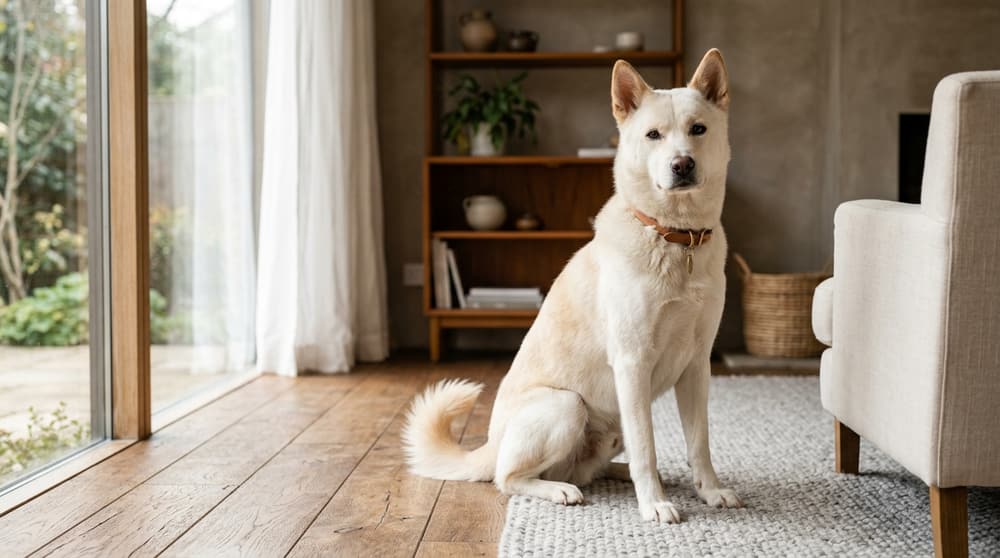
Because the Shiba Inu is a native Japanese breed, traditional names fit naturally. Coat-color picks like Kuro (black) or Shiro (white) work well if they match your pup's fur. Iconic heritage names like Hachi, Taro, Momo, or Sakura are timeless favorites.
What does 'Hachi' mean in Japanese?
Hachi means 'eight' (八), considered a lucky number in Japan representing infinite expansion and prosperity. Hachiko's name added the suffix '-ko', a common affectionate ending in Japanese naming tradition.
Are Japanese names hard to pronounce for dogs?
No. Dogs respond to sound clarity and rhythm rather than semantic meaning. Most Japanese names are short, clipped, and evenly weighted, making them exceptionally easy to call across distances and simple for dogs to distinguish from everyday conversation.
Why do Japanese names often end in -ko, -maru, or -taro?
These are traditional Japanese name suffixes: '-ko' (子) means child (often used for affectionate female or pet names like Hachiko), '-maru' (丸) means round or precious circle (widely used for beloved companion animals), and '-taro' (太郎) designates an eldest son or leader.
💬 Community & Next Steps
Share Your Japanese Dog Name
Over 100 poetic Japanese names with deep cultural meanings and clean melodic syllables. What Japanese moniker did you give your pup? Share below!
From Princess Fluffybutt to Nacho to Beyoncé-adjacent picks, the funniest names for female dogs, covering pun-based, ironic, and laugh-out-loud options.
From Catalina to Mariposa to Esperanza, female dog names rooted in Hispanic and Latin American culture, covering Mexican, Caribbean, and South American influences.
From Remi to Doe to Scout, the best names for female hunting dogs, covering gun dog breeds, field-tested picks, and names built for sharp recall out in the field.
From Luna to Freya to Nala, the best names for female Shepherd dogs, mainly German Shepherds, with picks that also suit Australian and Belgian Shepherds.
From Shadow to Raven to Pepper, the best names for female black Labradors, covering hunting, water-dog, midnight-coat, and gentle family-companion picks.
From Shadow to Coal to Hunter, the best names for male black Labs, covering field-trial champions, water-dog picks, glossy-coat themes, and loyal family dogs.
From Milo to Gizmo to Bentley, the best names for small male dogs, covering cute, unique, and meaning-based picks for Chihuahuas, Yorkies, and Pomeranians.
From Oreo and Domino to Yin-Yang, the ultimate guide to black and white dog names, covering tuxedo patterns, spotted coats, food-inspired, and pop-culture picks.
 ⚡ 55+ Strength Lexicon⏱️ 8 min read